
Why Subfloor Preparation Matters For Commercial Flooring
The flooring you see is only part of the job.
Uneven screeds, old adhesive, moisture, damaged areas and previous repairs can all affect how a new commercial floor looks and performs. That is why we look carefully at what is underneath before deciding how the floor should be prepared.
Good Flooring Starts Underneath
When a commercial floor is being replaced, most of the attention naturally goes on the new product.
Carpet tiles, LVT, sheet vinyl and safety flooring are what everyone sees when the job is finished. But before any of those products are installed, the condition of the existing floor needs to be assessed.
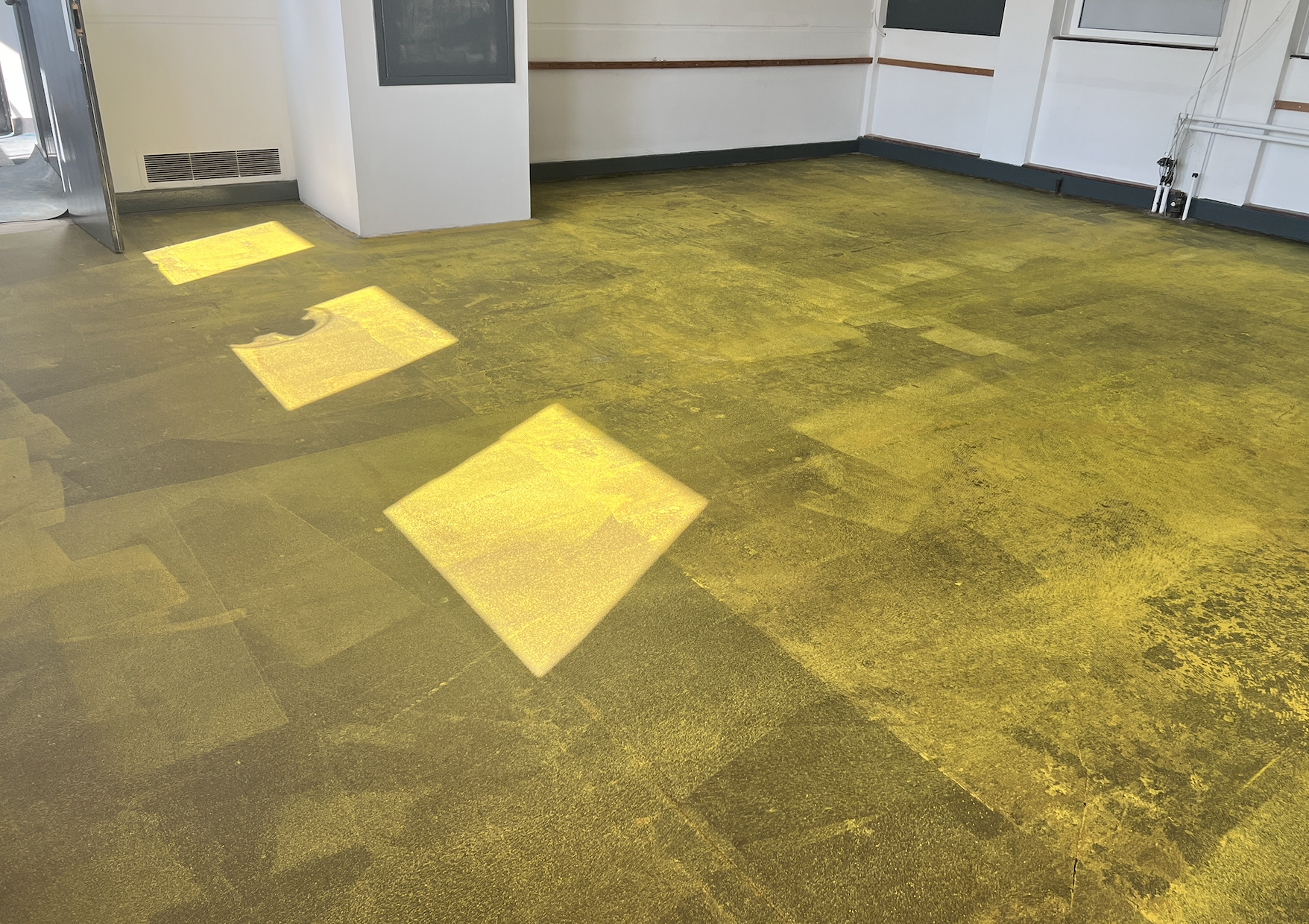
A surface can look reasonably sound until the old floor covering is removed. Once it comes up, we may find adhesive residue, cracked screed, uneven areas, old repairs or different substrates meeting within the same room.
What we find underneath can influence the preparation required and, in some cases, the flooring system that is suitable for the area.
That is why subfloor preparation isn’t an extra detail at the end of a job. It is part of planning the flooring installation properly from the start.
What Can Be Hiding Under An Existing Commercial Floor?
Refurbishment work can be particularly interesting because the floor may have been altered several times during the life of the building.
Once existing carpet, vinyl or tiles are removed, it isn’t unusual to find:
- Old carpet or vinyl adhesive
- Previous smoothing compounds
- Cracked or damaged screed
- Patch repairs from earlier work
- Uneven areas
- Changes in floor level
- Different substrates meeting within one space
- Remnants of previous floor coverings
Finding these things does not automatically mean there is a serious problem.
It simply means we need to understand what we are working with before deciding on the next stage.
Covering over an unknown or unsuitable surface and hoping for the best isn’t a sensible approach, particularly on a commercial flooring project where the finished floor may have to cope with regular foot traffic, furniture, trolleys or everyday workplace use.
What We Check Before Installing Commercial Flooring
The preparation required depends on both the existing floor and the new flooring being installed.
Depending on the project, we may need to consider:
- The overall condition of the subfloor
- Cracks, damaged or loose areas
- Existing adhesive residues
- Previous smoothing compounds or screeds
- Uneven areas and changes in level
- Moisture conditions where relevant
- The type of flooring being installed
- The adhesive or installation system
- How the area will be used
- Relevant manufacturer installation guidance
There is no single preparation method that is right for every floor.
A substrate being prepared for carpet tiles may have different requirements from one being prepared for LVT, commercial sheet vinyl or safety flooring.
The condition of the actual site needs to be considered rather than assuming the same preparation specification will work everywhere.
Why LVT & Commercial Vinyl Need Good Preparation
Smooth resilient floor coverings can be particularly unforgiving of poor preparation.
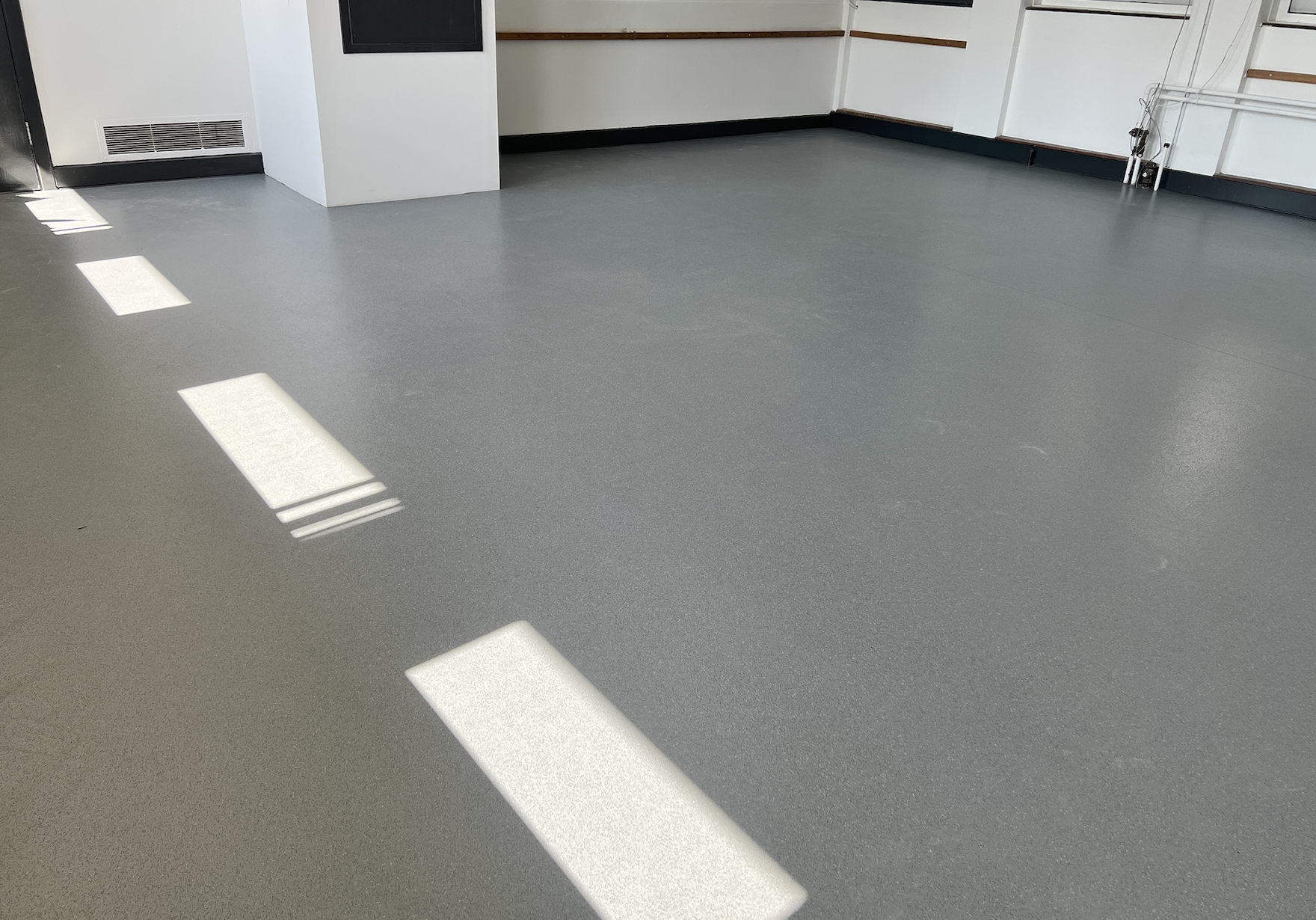
LVT, sheet vinyl and safety flooring generally need a smooth, sound and suitable surface before installation.
These materials can follow imperfections in the floor underneath. Ridges, damaged screed, adhesive residue or inconsistencies in the prepared surface can sometimes become noticeable through the finished flooring.
In the flooring trade this is sometimes referred to as imperfections telegraphing through the finished floor.
Preparation also needs to be compatible with the adhesive and flooring system being used.
Products from manufacturers such as Karndean, Amtico and Polyflor have installation requirements that need to be considered when preparing the subfloor.
This is one reason we prefer to assess a commercial flooring project before providing an estimate rather than assuming the existing surface is ready to receive the new floor.
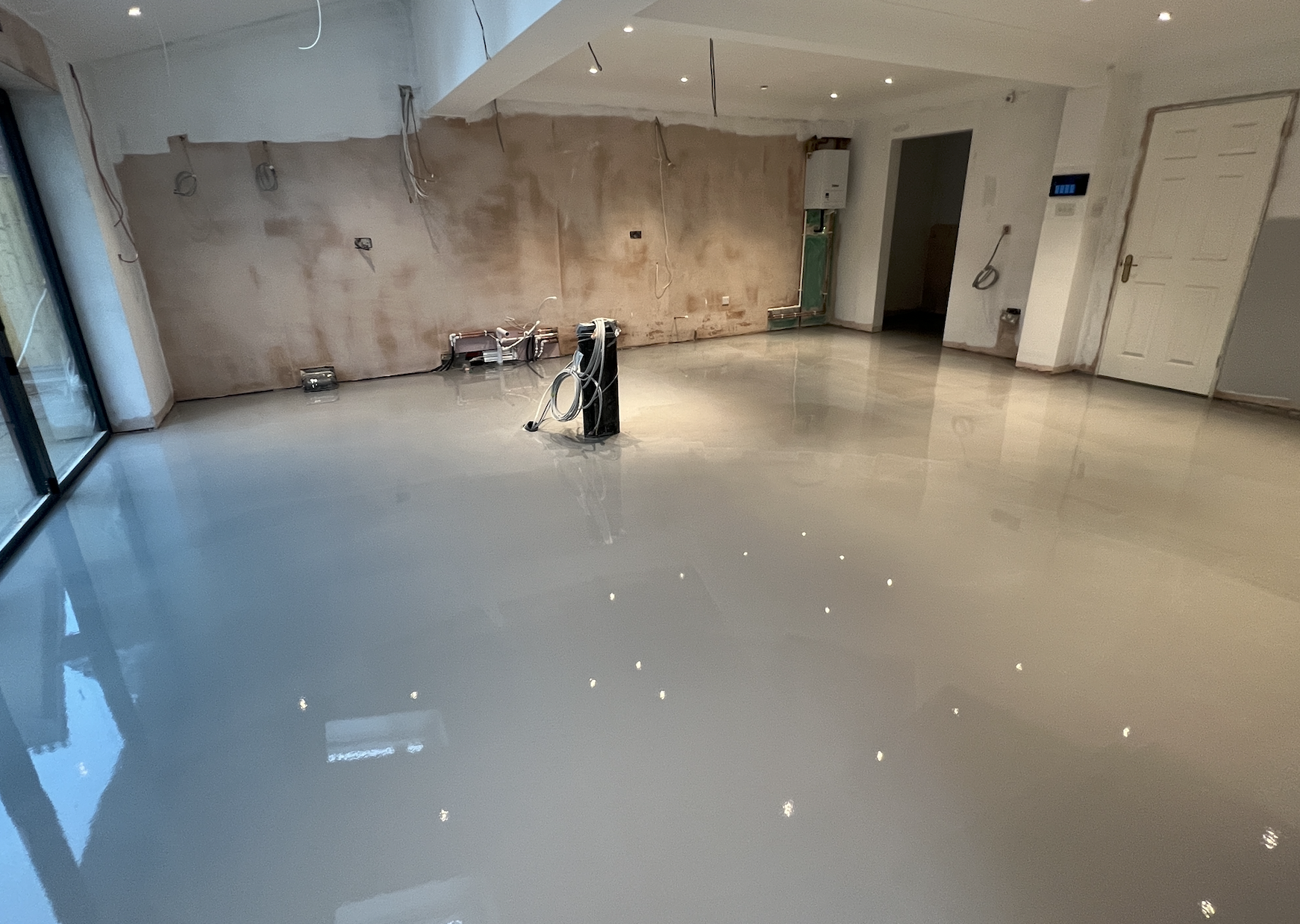
Screeding & Smoothing Compounds
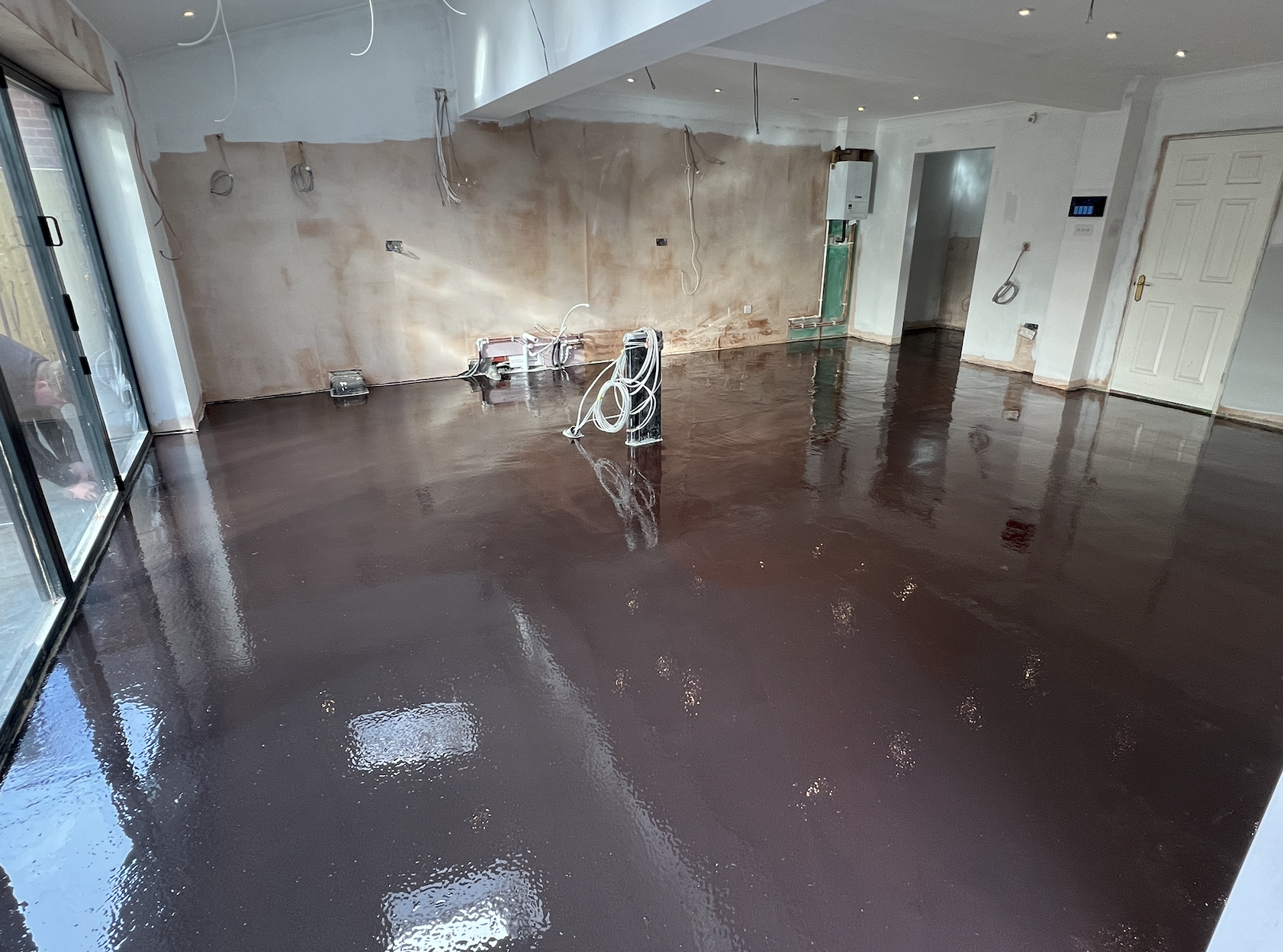
Smoothing compounds are commonly used as part of commercial flooring preparation.
Depending on the product and the existing substrate, they can be used to create a smoother and more consistent surface before LVT, sheet vinyl, safety flooring and other floor coverings are installed.
But applying smoothing compound is not simply a case of pouring it over whatever happens to be there.
The existing floor still needs to be assessed and prepared correctly first.
Depending on the site, preparation may include dealing with loose material, removing or preparing old adhesive residues, repairing damaged areas, priming the substrate or carrying out other work before a smoothing compound is applied.
The products and preparation method used need to suit the substrate, the flooring system and the conditions on site.
Moisture & Commercial Flooring
Moisture is another factor that may need to be considered, particularly with concrete and screeded subfloors.
A floor can appear dry on the surface while moisture conditions within the substrate still need to be taken into account before certain floor coverings are installed.
Where relevant, testing can help establish whether the substrate is suitable for the proposed flooring system or whether further preparation needs to be considered.
If moisture control is required, the correct approach depends on the individual substrate, site conditions and flooring system.
It isn’t something we would specify without inspecting the floor.
This is particularly important when installing resilient products because unsuitable moisture conditions can affect the flooring or adhesive system after installation.
Why Preparation Can't Always Be Decided Before The Old Floor Has Come Up
A site measure tells us a lot, but there are occasions where the full condition of a subfloor only becomes visible once the existing floor covering has been removed.
That is particularly common during refurbishment work.
An area that looks straightforward from above can reveal previous repairs, old adhesive or changes in the substrate once work begins.
For that reason, commercial flooring preparation sometimes has to respond to what is actually uncovered on site.
The aim isn’t to carry out unnecessary preparation. It is to provide a suitable surface for the flooring being installed.
What Can Happen When Preparation Is Overlooked?
Good preparation is partly about preventing avoidable problems.
Depending on the flooring and the condition of the substrate, inadequate preparation can affect:
- How smooth the finished floor looks
- How well imperfections underneath are concealed
- The suitability of the surface for adhesives
- Transitions between different floor areas
- The overall quality of the finished installation
With commercial vinyl and LVT in particular, the finished flooring can highlight rather than hide problems underneath.
Spending time getting the base right gives the new flooring the right foundation to be installed onto.
Why Preparation Affects The Finished Floor
Subfloor preparation is not normally the part of a flooring project that the client notices once everything is finished.
That is exactly how it should be.
The visible part is the carpet tile, LVT, vinyl or safety flooring. Underneath it should be a suitable, properly prepared surface doing its job.
A good flooring installation is therefore about more than choosing a product and fitting it.
We look at the complete flooring system — the existing substrate, any preparation required, adhesives where applicable and the final floor covering.
The finish everyone sees at the end starts with the work underneath.
Working In Occupied Commercial Buildings
Preparation is also part of the practical planning of a commercial flooring job.
An office, shop, school, communal area or other workplace may still need to function while flooring work is being carried out.
Depending on the individual project, work can sometimes be phased or arranged around access requirements to help reduce disruption.
Preparation products, adhesives and flooring systems can also have curing or drying times that need to be allowed for.
Furniture movements, access routes and the order in which different areas are completed can all affect how the job is planned.
There isn’t one solution that works for every building, which is why these points are best discussed during the site assessment.
Commercial Flooring & Subfloor Preparation
Enhanced Carpets & Flooring carries out commercial flooring, screeding and subfloor preparation for businesses, landlords, builders and commercial clients.
Our work includes carpet tiles, commercial vinyl, LVT, safety flooring, screeding and subfloor preparation.
Based in Portsmouth, we work across the surrounding areas and further afield depending on the project.
Rather than assuming an existing floor is suitable, we can inspect the site, look at the condition of the subfloor, discuss how the area is used and advise on suitable flooring and preparation options.
Any final preparation specification will depend on the individual site conditions, flooring system and relevant manufacturer guidance.
Planning a Commercial Flooring Project?
If you’re replacing flooring in an office, shop, communal area or other commercial premises, get in touch and we can take a look at the existing floor and discuss the options.
Trackbacks/Pingbacks