Commercial Flooring for Offices in Portsmouth: What Are the Best Options?
Choosing flooring for an office is not simply a case of picking something that looks good.
The floor may need to cope with staff, visitors, office chairs, furniture, regular cleaning and busy walkways every day. Different parts of the same office can also have very different requirements.
A carpet tile that works well underneath desks may not be the best choice for a staff kitchen, while flooring chosen for a reception area may have different priorities again.
At Enhanced Carpets & Flooring, we supply and install commercial flooring for offices and workplaces in Portsmouth and the surrounding areas. Here are some of the main options we consider when helping businesses choose new office flooring.
What Should You Consider When Choosing Office Flooring?
Before choosing a product, it helps to look at how the office is actually used.
Things we would normally consider include:
- The amount of foot traffic
- Office chairs and furniture
- Cleaning and maintenance
- Noise within the workspace
- Reception and customer-facing areas
- Kitchens, toilets and staff facilities
- Existing floor coverings
- The condition of the subfloor
- Access during installation
- Budget
- The expected use of the building
There isn’t one flooring product that is automatically right for every office.
In many projects, using more than one type of flooring across the building can make more sense than trying to use the same product everywhere.
Carpet Tiles for Offices
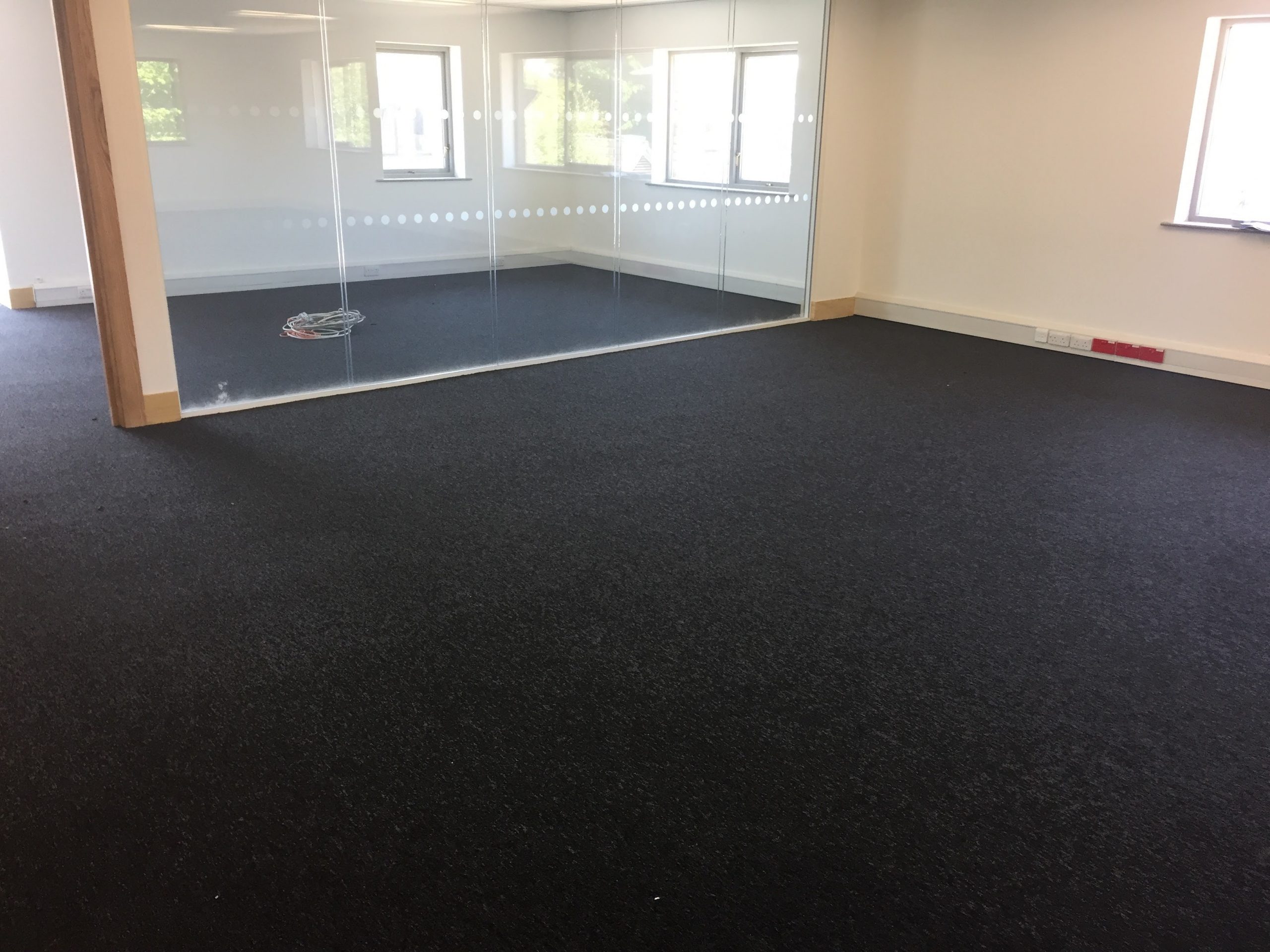
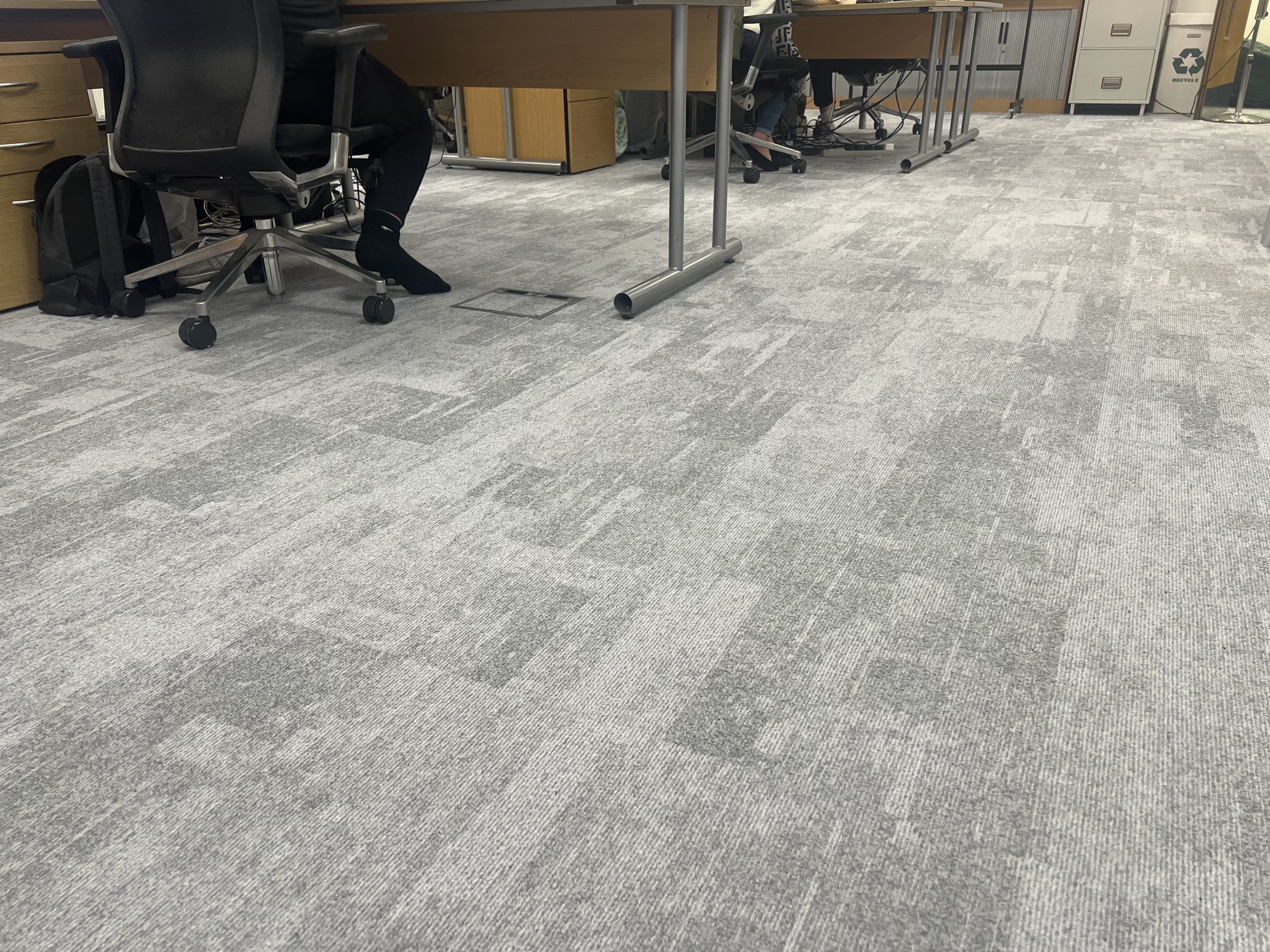
Carpet tiles are one of the most practical choices for office flooring and are widely used in commercial workplaces.
They work particularly well in open-plan offices, meeting rooms, corridors and areas containing desks and workstations.
One of their biggest advantages is their modular format.
If a particular area becomes damaged or badly marked, individual tiles can generally be replaced without having to replace the entire floor, subject to having suitable replacement tiles available.
Carpet tiles can also help with sound absorption compared with harder floor finishes, which can be useful in busy offices with phones, conversations, meetings and people moving around throughout the day.
There is a wide choice of colours, patterns and textures available from commercial manufacturers, ranging from simple neutral designs to layouts using different colours or tile directions to define areas within a workspace.
For many general office environments, carpet tiles remain a very sensible place to start.
LVT for Office Flooring
Luxury vinyl tile, usually referred to as LVT, can work particularly well where a business wants the appearance of timber, stone or another decorative finish combined with the practicality of a commercial floor covering.
It can be a good option for:
- Reception areas
- Meeting rooms
- Breakout areas
- Client-facing spaces
- Individual offices
- Staff areas
Manufacturers such as Karndean and Amtico produce flooring suitable for a range of different applications, although the correct product and installation system need to be selected for the intended use.
LVT is also relatively straightforward to clean, which can make it useful in areas where carpet is not preferred.
The preparation underneath it is particularly important.
Because LVT follows the surface it is installed onto, uneven areas, damaged screed, old adhesive and other imperfections may need to be dealt with before installation.
A good-looking LVT floor therefore starts with a suitable subfloor rather than simply choosing the design you like best.
Commercial Vinyl Flooring
Commercial vinyl is another practical option for offices and workplace environments.
Depending on the particular product and application, it can be used in corridors, kitchens, staff areas, toilets and other parts of a commercial building where a hard-wearing and easy-to-maintain surface is useful.
Commercial sheet vinyl also has fewer joins than many modular flooring products, which can be beneficial in certain environments.
There are many different types of commercial vinyl, however, and they do not all have the same properties.
The correct specification depends on where it is being installed, how the area is used and any particular performance requirements.
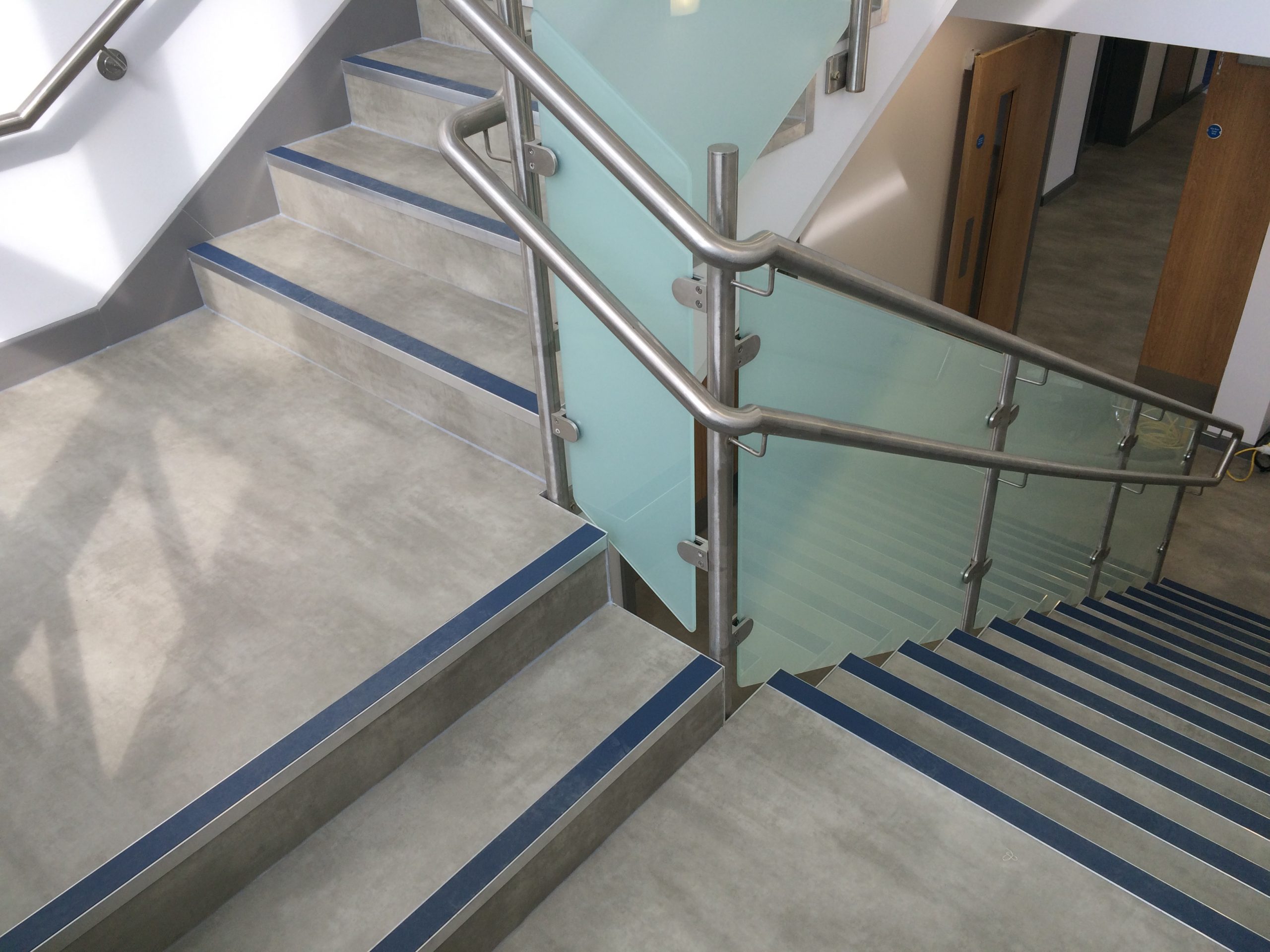
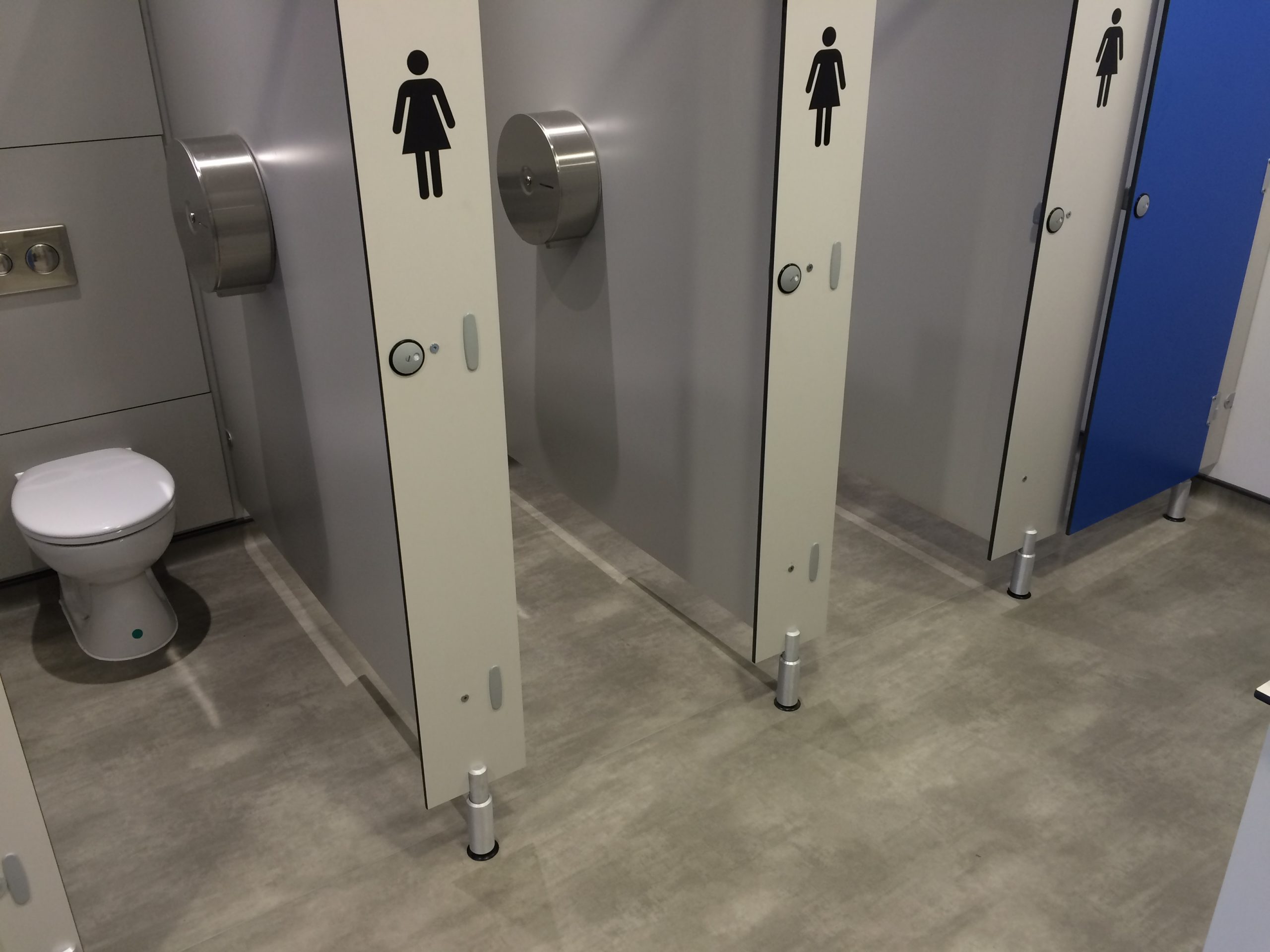
Safety Flooring for Office Kitchens, Toilets & Staff Areas
Not every part of an office necessarily needs the same type of flooring.
Areas where water or spillages are more likely may require a floor covering designed with increased slip resistance.
Depending on the building, safety flooring may be considered for areas such as:
- Staff kitchens
- Tea points
- Toilets
- Changing areas
- Utility rooms
- Other areas where additional slip resistance is required
Manufacturers such as Polyflor produce commercial safety flooring for a wide range of applications.
The correct flooring should be chosen according to how the area is used, the conditions on site and the relevant manufacturer’s guidance rather than simply assuming every vinyl product will perform in the same way.
Using Different Flooring Across the Same Office
One of the useful things about modern commercial flooring is that there is no need to choose one product for an entire building.
An office could, for example, use carpet tiles around desks and workstations, LVT within a reception or meeting area and suitable commercial vinyl or safety flooring in staff facilities.
This allows the flooring to suit the practical requirements of each space.
It can also help visually separate different parts of an open-plan workplace without needing physical walls or partitions.
The important part is planning how the different flooring products meet.
Floor heights, doorways, transitions and the condition of the underlying subfloor all need to be considered so that the different areas work together properly.
Why the Subfloor Still Matters
Whichever office flooring is chosen, we still need to look at what is underneath it.
An existing floor can hide old adhesive, damaged screed, uneven areas, previous repairs and changes between different substrates.
Some of this may only become fully visible once the old flooring has been removed.
Depending on what we find, preparation may include removing residues, repairing damaged areas, applying appropriate primers, using smoothing compounds or carrying out other preparation before the new flooring is fitted.
LVT and commercial vinyl in particular generally require a smooth and suitable surface because imperfections underneath can affect the appearance of the finished floor.
This is why we assess the existing floor rather than automatically assuming it is ready for the new flooring to go straight down.
Replacing Flooring in an Occupied Office
The flooring itself is only one part of planning an office refurbishment.
Many businesses still need to operate while flooring work is being carried out.
Furniture may need moving, staff still need access and certain parts of the building may need to remain usable.
Depending on the individual project, installation can sometimes be planned in sections or around access requirements to help reduce disruption.
Things such as preparation work, adhesive systems, curing times, furniture movements and access between areas can all affect the order in which a project is completed.
These are useful things to discuss at the site visit rather than waiting until installation starts.
Carpet Tiles, LVT or Vinyl – Which Is Best?
There isn’t really a winner.
The best office flooring depends on what you need it to do.
Carpet tiles are a strong all-round option for general office areas, particularly where comfort, acoustics and the ability to replace individual sections are useful.
LVT can work well in reception areas, meeting rooms and other spaces where a decorative hard flooring finish is preferred.
Commercial vinyl is practical for many high-use areas where cleaning and durability are important.
Safety flooring may be more appropriate where increased slip resistance is required.
Quite often, the best solution is a combination of products rather than choosing the same floor covering throughout the entire building.
What About Office Chairs and Heavy Furniture?
Furniture is another factor worth considering.
Office chairs with castors create repeated movement over relatively small areas of the floor, while filing cabinets, desks and other heavy furniture can place concentrated loads on the flooring.
The intended use of the area should therefore be considered when selecting both the floor covering and installation method.
Protective chair mats are sometimes used, but whether they are required or suitable will depend on the flooring product and manufacturer’s recommendations.
It is better to think about these details when choosing the flooring rather than after the office has been put back together.
Planning for Future Repairs and Changes
Commercial buildings change.
Desks get moved, departments are reorganised, electrical and data services are altered and individual areas can receive more wear than others.
This is another reason carpet tiles are particularly useful in many office environments.
Where matching stock is available, individual tiles can generally be lifted and replaced rather than disturbing the whole floor.
Whatever product is selected, it can also be sensible for a client to retain a small amount of spare material from the original installation for future repairs, particularly where colours or product ranges may change over time.
Commercial Office Flooring in Portsmouth
Enhanced Carpets & Flooring supplies and installs flooring for offices, businesses, landlords, builders and other commercial clients.
Our commercial flooring work includes:
- Carpet tiles
- Commercial carpets
- LVT
- Commercial vinyl
- Safety flooring
- Screeding
- Smoothing compounds
- Subfloor preparation
We are based in Portsmouth and work across the surrounding areas, with projects further afield considered depending on the job.
Before recommending a flooring system, we can visit the property, look at how the different areas are used and assess the existing floor.
That gives us a much better idea of which products and preparation methods may be suitable than trying to make that decision from a photograph or room size alone.
Planning New Flooring for an Office?
If you’re refurbishing an office, replacing worn flooring or deciding which floor coverings would work best in different parts of your workplace, get in touch.
We can arrange a free site measure, inspect the existing floors and talk through the practical options for the building.